

High-efficiency static aeration system for wastewater treatment engineered to provide increased effluent Dissolved Oxygen content in new treatment facilities and retrofits alike.
Mega-AIR Low-Profile Cascade Aeration System (LPCA)
The Mega-AIR Low-Profile Cascade Aeration System (LPCA) is a compact, hydraulically driven aeration solution designed for wastewater treatment facilities where performance, reliability, and operational flexibility matter.
Engineered for installation in new basins and retrofit applications, and designed for minimal basin depth, the Mega-AIR (LPCA) delivers effective oxygen transfer without blowers, diffusers, or complex mechanical systems. By leveraging controlled cascade aeration and optimized hydraulic design, the system improves dissolved oxygen levels while reducing energy use, maintenance requirements, and operational complexity.
The Mega-AIR (LPCA) can be provided as a drop-in solution for existing channels or as a standalone fabricated tank for integration into new or upgraded treatment processes. Additionally, the Mega-AIR (LPCA) can be offered with a full performance guarantee for effluent Dissolved Oxygen (DO) content of 6.0 mg/L or 7.0 mg/L depending on certain application parameters.
As part of the JMS Mega-TREATMENT™ portfolio, Mega-AIR reflects JMS’ commitment to practical engineering, proven performance, and long-term lifecycle value.
Exceptional Performance Across the Full Range of Daily Flow
The Mega-AIR (LPCA) is designed to perform consistently under the variable flow conditions common in municipal and industrial treatment systems. Unlike aeration technologies that rely on fixed air delivery systems or mechanical components, the Mega-AIR (LPCA) adapts naturally to changing hydraulic conditions.
This inherent flexibility supports effective oxygen transfer during peak, average, and low-flow operation, making the Mega-AIR (LPCA) particularly well suited for facilities experiencing diurnal flow swings, seasonal variability, or evolving regulatory requirements.
Designed for Low Maintenance and Long-Term Reliability
The Mega-AIR (LPCA) was engineered with operational simplicity in mind. With no rotating equipment, submerged diffusers, or air delivery systems, routine maintenance is significantly reduced compared to conventional aeration technologies.
The system’s static, open design minimizes fouling risk and allows for straightforward inspection and cleaning using standard plant maintenance procedures, reducing downtime and maintenance labor while supporting predictable, long-term operation.
Operational Benefits
- Minimal routine maintenance
- No specialized tools required
- Easy access for inspection and cleaning
- Reduced risk of mechanical failure
- Long service life with stable performance
Components
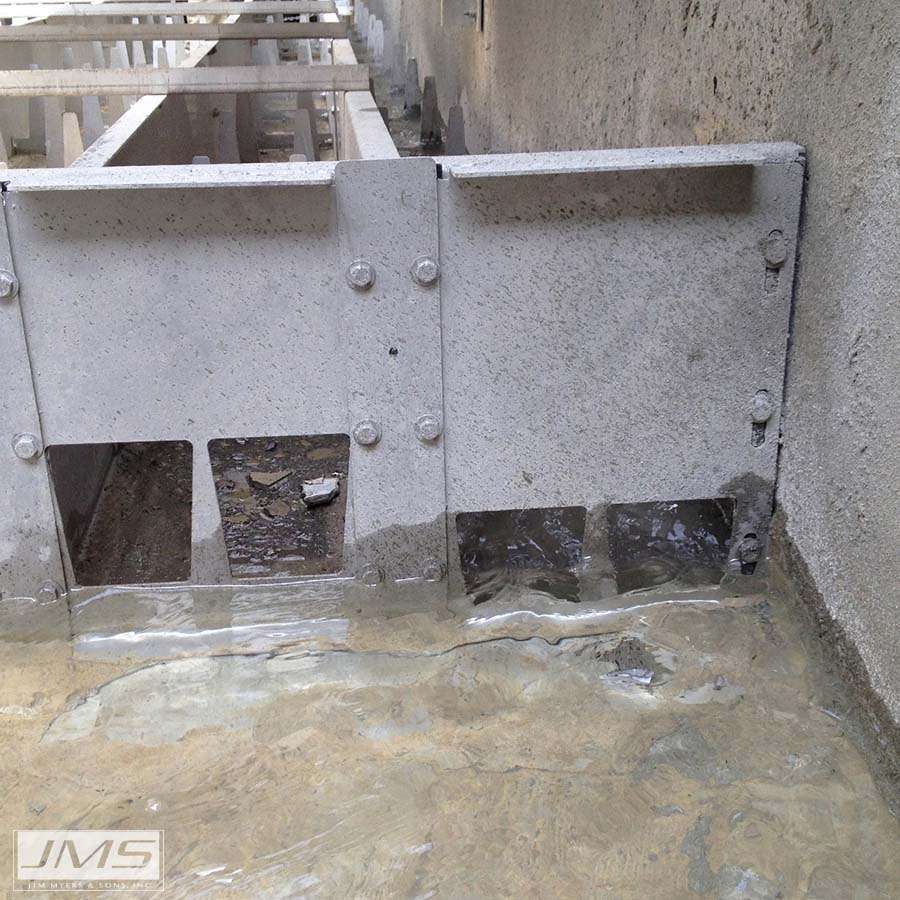
The core component of the JMS Mega-AIR Low-Profile Cascade Aeration System (LPCA), the leaping weir assembly, promotes optimal velocity and pressure changes. Patented air infusion plates maximize the air-to-water mixture increasing effluent DO levels.
Unlike prior cascade designs, where water falls steeply from step to step, requiring great depths, the Mega-AIR Low-Profile Cascade Aeration System (LPCA) uses optimum slopes of less than 5.5 degrees. Each channel is fitted with patented trapezoidal air infusion plates with leaping weirs, staged to create velocity and pressure changes throughout the length of the channel.
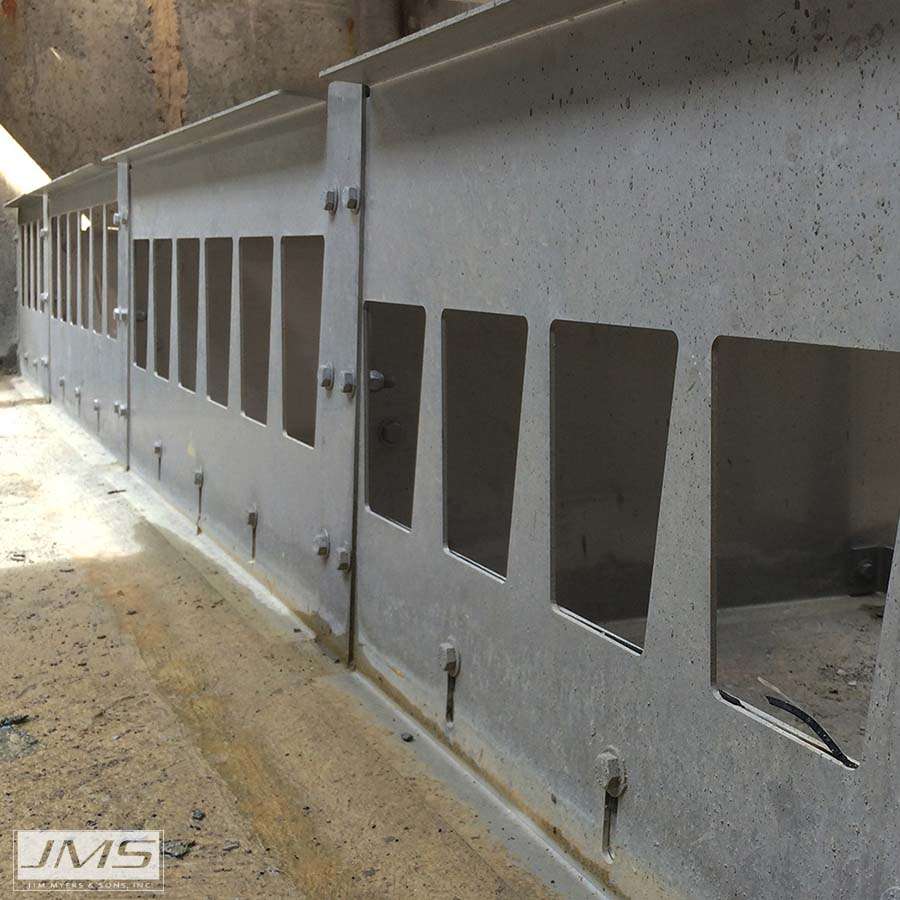
The JMS Mega-AIR Low-Profile Cascade Aeration System (LPCA) uses patented Influent Control Gates designed for low or peak flow rates, with each channel width optimized for a plant’s full range of flow.
Influent flow control gates are also trapezoidal and serve as flow control weirs and submerged orifices when flows demand. The first stage channel is designed for minimum hydraulic flow rates. Individual channel widths are optimized for job-specific application flow rates.
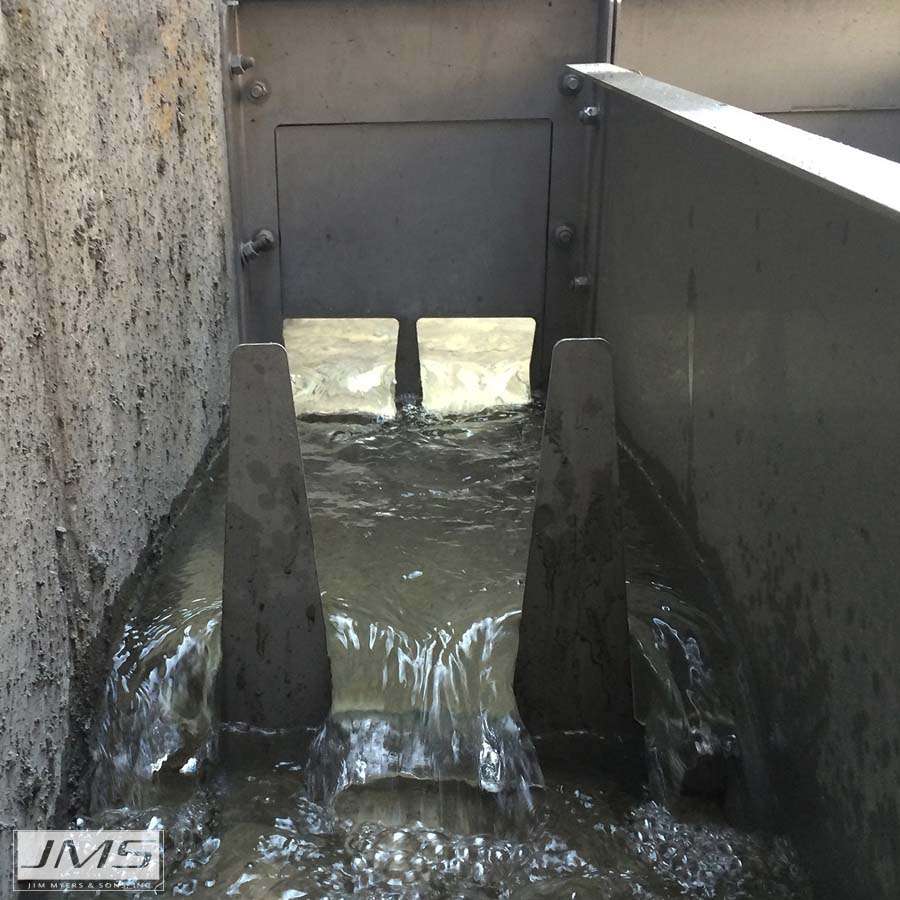
The JMS Mega-AIR Low-Profile Cascade Aeration System (LPCA) includes a Minimum Influent Flow Control Gate to control variable influent flow rates.
Why Go Low-Profile?
Low-profile aeration systems offer clear advantages in today’s treatment environments:
- Well-suited for shallow basins and retrofits
- Reduced structural modifications
- Simplified installation
- Lower capital and operating costs
- Greater operational flexibility
The Mega-AIR (LPCA) delivers these benefits without compromising performance, making it a practical, future-ready solution for modern treatment facilities.
Key Advantages of Mega-AIR LPCA
- Low-Profile Design - Ideal for shallow basins, retrofits, and space-constrained installations.
- No Blowers or Diffusers - Eliminates energy-intensive equipment and reduces lifecycle costs.
- Hydraulically Driven Performance - Oxygen transfer achieved through controlled cascade action, not mechanical aeration.
- Consistent Dissolved Oxygen Transfer - Reliable performance across a broad operating envelope.
- Durable, Proven Construction - Built for harsh wastewater environments with minimal long-term degradation. Available as a drop-in unit or with integrated stainless-steel tankage.
- Seamless Integration - Easily incorporated into new designs or existing treatment trains by providing a drop-in solution or free-standing unit with included stainless steel tankage.
Related Videos
Success Story
How a Tennessee Wastewater Plant Achieved Reliable Dissolved Oxygen, With Minimal Maintenance
Customer
Western Tennessee Waterworks
Arlington Wastewater Treatment Plant
Arlington, Tennessee
The Challenge
When the Arlington Wastewater Treatment Plant was commissioned in 2007, Western Tennessee Waterworks needed a dependable way to increase dissolved oxygen (DO) levels prior to discharge into Scotts Creek. The solution had to meet state and federal effluent requirements, operate reliably under varying flow conditions, and avoid adding unnecessary maintenance or operational complexity.
With a target effluent DO concentration of 6.0 mg/L and peak plant flow rate of up to 12 MGD, the plant required an aeration approach that could deliver consistent performance without blowers, diffusers, or mechanical equipment.
The JMS Solution
JMS worked with the project team to integrate a Mega-AIR Low-Profile Cascade Aerator (LPCA) into the plant design.
Based on site conditions and performance requirements, JMS application specialists recommended a 21 ft W × 24 ft L Mega-AIR (LPCA) system, engineered to increase dissolved oxygen through controlled cascade aeration and optimized hydraulic design.
The system was delivered to the site in three prefabricated sections and installed quickly, minimizing disruption during commissioning.
The Results
- Consistent dissolved oxygen levels guaranteed by JMS to meet or exceed 6.0 mg/L
- Reliable performance under daily operating conditions
- Minimal maintenance requirements, limited to biannual washdowns
- No moving parts, blowers, or diffusers
- Low operating and lifecycle costs
- Stable performance more than six years after commissioning